Brazilian livestock farming is moving into a new cycle. Sustainable monitoring, emissions reduction, and sustainable practices are no longer differentiators but have become global requirements, driven by COP30, ESG agendas, and markets demanding transparency from farm gate to fork.
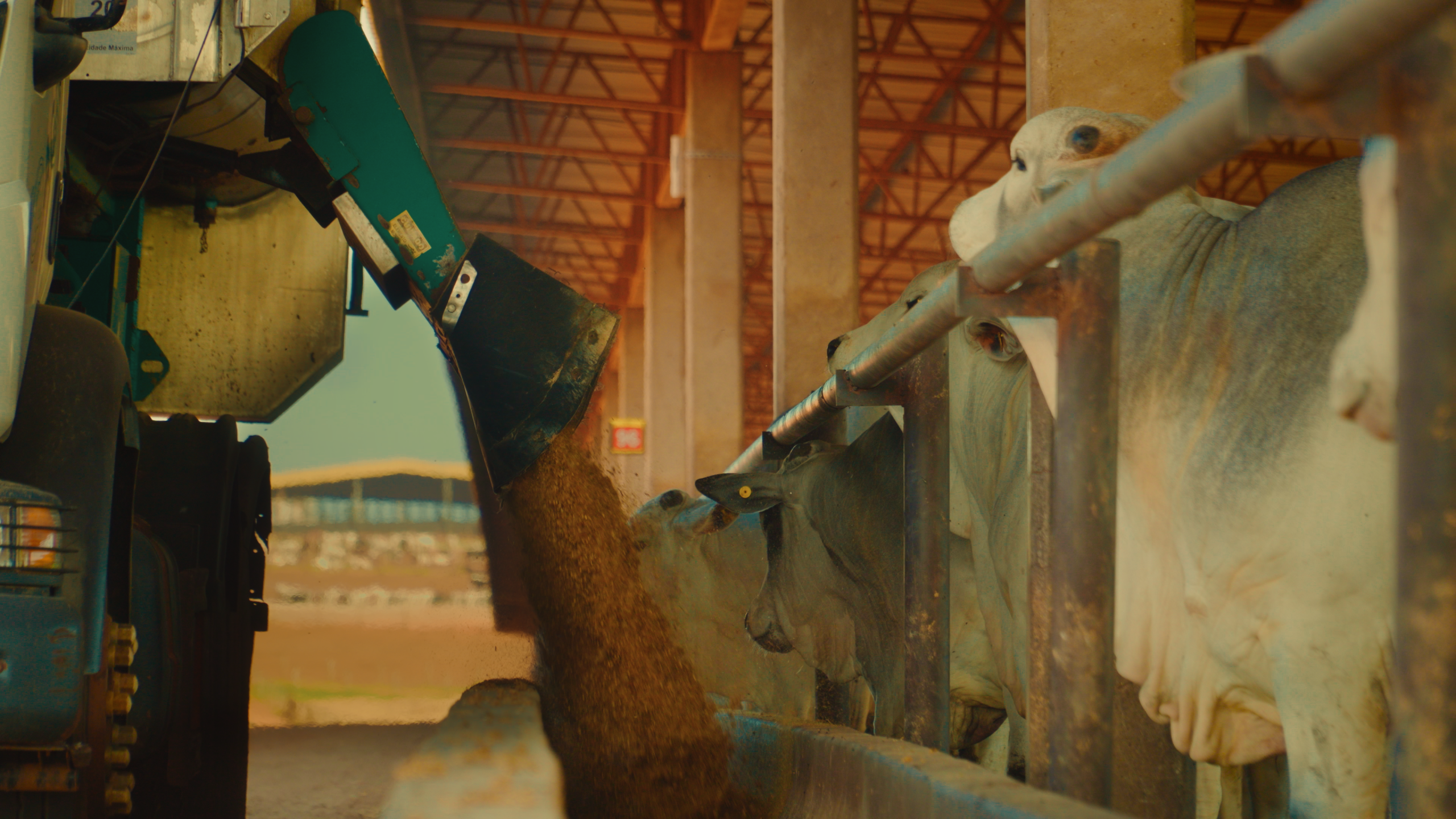
Within this context, Agropecuária Vista Alegre (Better Beef Confinamento) takes center stage in the Better Group. As the largest covered feedlot with concrete pens in Latin America, with an approximate capacity of 136,000 animals/year, it concentrates the main initiatives that pave the way for low-emission beef production, based on science, precision management, and a circular economy.
The audited results are still under development, but the processes already show consistent progress and support a modern, competitive, and responsible production model.
Vista Alegre Agribusiness: where climate mitigation happens in practice
It is during lockdown that emission reductions can be measured, managed, and optimized. That is why Vista Alegre has become the focus of the Better Group's environmental initiatives.
Controlled environment
The 50% structure, covered and with concrete bays, provides thermal comfort and less climate variability, reducing stress and increasing efficiency—factors that decrease the intensity of greenhouse gas emissions, mainly methane per kilogram produced.
Precision nutrition
• Improved feed conversion
Less waste
• Diets formulated with technical rigor
• Greater metabolic efficiency
• Shorter and more predictable production cycles
Results: smaller environmental footprint per animal, without compromising performance.
Circular Economy that generates efficiency.
THE Vista Alegre Agriculture leads the implementation of circular economy practices within the Better Group, such as:
• Strategic incorporation of by-products into the diet,
• assessment of opportunities for energy recovery,
• Continuous improvement routines focused on reducing emissions and maximizing efficiency.
This innovation ecosystem prepares the group to meet international standards for Low Carbon Beef.
Soil, management and operational sustainability
Low-carbon beef involves responsible management, environmental balance, and science-based protocols. Vista Alegre, We have already made progress in:
• Sustainable and efficient management of inputs and nutrients, strengthening the responsible use of resources;
• Humane and animal welfare practices;
• Monitored environmental indicators that will serve as a basis for future audits.
We are consolidating the necessary technical structure for national and international certifications.
Technology and traceability as the basis for sustainable monitoring.
Modernizing confinement allows for the connection between performance, transparency, and sustainability.
Full traceability
Each batch of animals is monitored from the moment they enter, allowing for:
• Sustainability at the feed trough, with high-performance nutritional protocols;
• Integrated management of the production cycle, ensuring operational efficiency, high performance, and strategic return of nutrients to the soil;
• Responsible emissions management, with indicators that reinforce the operation's environmental commitment;
• Compliance with the requirements of the European Union, COP30 and other international protocols.
Integration with Better Beef Meat Processing Plant: end-to-end transparency.
The vertically integrated chain of Better Group It guarantees that:
• that the quality built up during confinement is preserved,
• traceability must continue all the way to slaughter,
• ESG governance should be integrated from the field to the industry.
Industrial operations are the natural continuation of the sustainable journey begun in Vista Alegre.
Why the Vista Alegre Agriculture (Better Beef Feedlot) It's a competitive advantage.
• Controlled and predictable environment.
• Precision nutrition that reduces emissions.
• Humanitarian and sustainable protocols.
• Highly trained teams.
• Industrial integration that ensures consistency.
The combination of these factors establishes a new standard for feedlot livestock farming in Brazil.
Strategic agenda and vision for the future
The ongoing actions build the technical foundation for future audits and certifications, aligned with key global agendas:
COP30
• Mercosur–European Union Agreement
• traceability and decarbonization regulations
The meat produced under this model is prepared for markets that value origin, low footprint, and transparency.
Commitment to future generations
The transition to low-emission livestock farming is inevitable. The difference lies in who decides to lead this process. Vista Alegre Agriculture, This transformation has already begun in a technical, consistent way, aligned with the future.
Each improved process, each monitored indicator, and each implemented innovation reinforces a clear commitment: to produce more, emit less, and deliver meat with real environmental responsibility.
The meat of the future has sustainable responsibility.
Better Group, feeding today, caring for tomorrow!