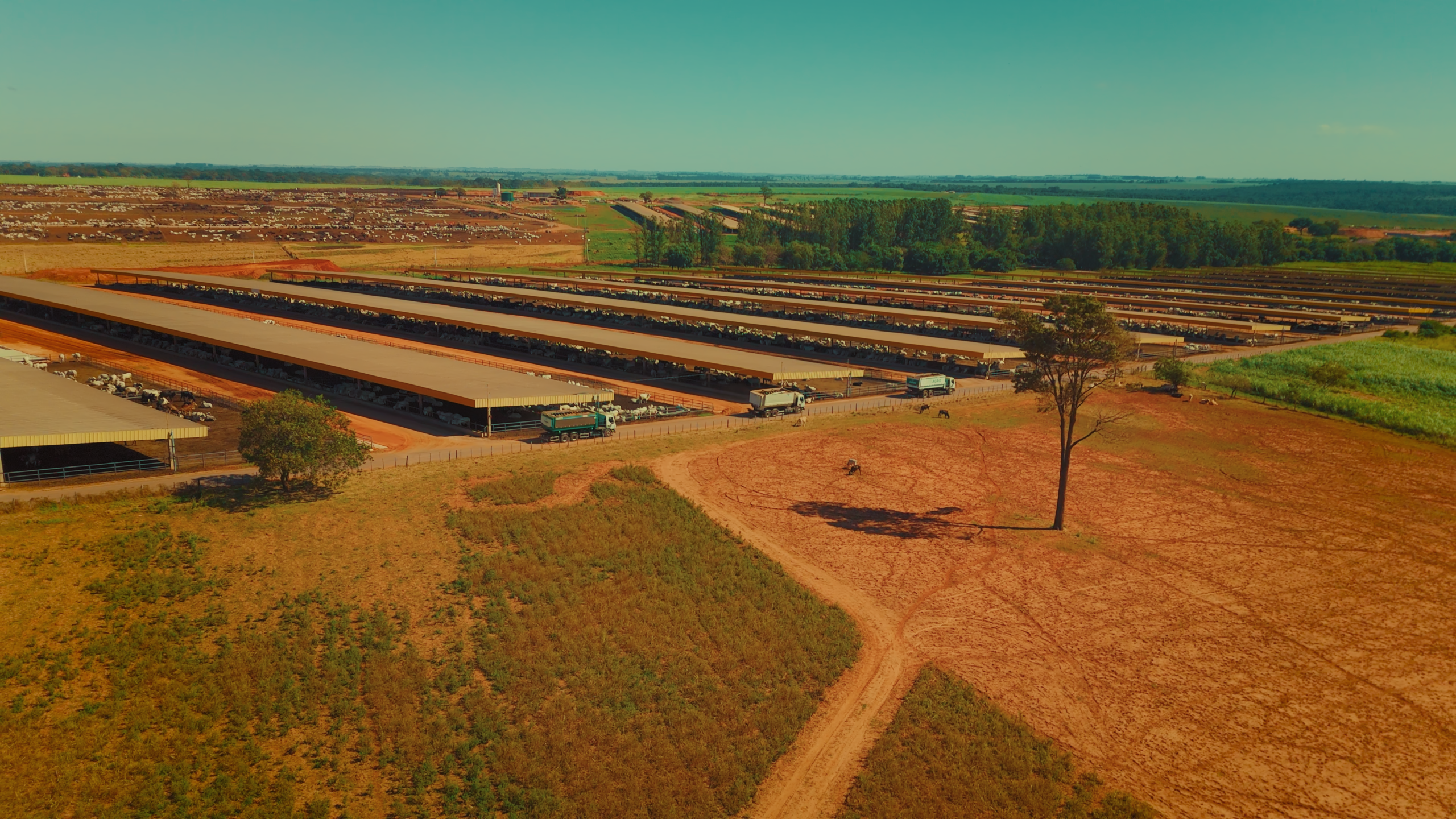
In-depth analysis of how Brazilian livestock farming is integrating traceability, precision nutrition, and geomonitoring to redefine global meat production standards and access high-value markets.
Introduction: From Scale to Systemic Efficiency
While Brazilian agribusiness demonstrates robust macroeconomic performance, with sectoral GDP growth projected at 11.61% by the third quarter of 2025, a quieter and more technically sophisticated transformation is occurring at the operational level. The traditional image of extensive livestock farming is being replaced by a model of sustainable intensification, where technology is not an accessory but the core of a new productive architecture. A prime example is the operation of Agropecuária Vista Alegre. (Better Beef Feedlot) which houses 136,000 cattle per year under a controlled system, an infrastructure that challenges conventional perceptions and signals a paradigm shift: large-scale animal protein production with higher quality and less environmental impact.
The Challenge of Scale as a Driver of Innovation
With the largest commercial herd on the planet, estimated at 238 million head, and export volumes exceeding US$26.1 billion in 2024, Brazilian livestock farming is subject to rigorous regulatory, socio-environmental, and market evaluations commensurate with its production scale. The inherent challenge is not only to maintain production but also to guarantee its legitimacy and sustainability in an increasingly demanding global market. The sector's response has been to transition from promises to measurable and auditable actions.
Brazil's competitive advantage is emerging from its ability to implement verifiable ESG (Environmental, Social, and Governance) practices throughout the value chain. This includes animal welfare certifications and, crucially, traceability systems that offer unprecedented visibility, far beyond the simple origin of the animal. What was once considered marketing rhetoric has become an auditable operational reality, fundamental for risk management and access to premium markets.
The Better Group's Vertical Integration Model
Leadership, in this context, means converting strategic concepts into concrete and efficient operations. The Better Group exemplifies this approach through a vertical integration model that aligns primary production (field) with industrial processing. This structure allows for quality control and consistency that are difficult to achieve in fragmented supply chains.
At Vista Alegre Agribusiness (Better Beef Feedlot), In the largest indoor feedlot in Latin America, the application of science, technology, and animal welfare is evident. The operation, which manages approximately 40,000 animals simultaneously, is based on a synergistic system of advanced practices:
- Precision Nutrition: Diets are dynamically formulated and adjusted for each batch of animals, optimizing feed conversion and herd health, rather than a standardized feeding approach.
- Controlled Environment: The covered structure mitigates heat stress, a critical factor in tropical climates that directly affects weight gain and animal welfare. This translates into greater productive efficiency and consistency in meat quality.
- Continuous Monitoring: Sensors and surveillance systems operate 24/7, allowing for the early detection of health or behavioral anomalies, enabling proactive rather than reactive interventions.
- Third-Party Validation: Recognition through the Top Angus Beef Producer 2022 award serves as external validation of the effectiveness of these practices, certifying the superior quality of the final product.
The aggregate result is a system where animal health and welfare, meat quality, and resource efficiency are not conflicting objectives, but interdependent outcomes of a well-managed process.
Traceability as a Risk and Accountability Management Tool
The fundamental distinction between intention and commitment lies in the ability to audit. By 2025, the Better Beef slaughterhouse will process more than 335,000 animals under a rigorous socio-environmental monitoring system that validates the origin of each supplier. In collaboration with geospatial intelligence platforms such as Agrotools, each supplier property undergoes a multifactorial compliance analysis.
The verification system is designed to ensure adherence to critical sustainability criteria, including:
| Monitored Criterion | Analysis Description | Strategic Importance |
| Environmental Compliance | Verification of overlap with areas of illegal deforestation, IBAMA embargoes, and other environmental restrictions. | Mitigating legal and reputational risks associated with environmental liabilities. |
| Working conditions | Cross-referencing data with inspection lists to identify any association with forced labor or child labor. | Compliance with human rights due diligence: a growing requirement from international investors and clients. |
| Protected Lands | Geospatial analysis to ensure that properties do not encroach on indigenous lands or conservation units. | Respect for legislation and the rights of traditional communities, preventing land conflicts. |
| Lot Traceability | Maintaining a continuous record that links the final product to the animal and its property of origin. | It guarantees complete transparency and the ability to conduct accurate recalls, strengthening food safety. |
The goal of this system is not to declare perfection, but rather to establish a transparent framework for continuous improvement and the remediation of non-conformities. It's about transforming the ESG commitment into an operational, manageable, and, above all, auditable process.
Building a New Paradigm for Global Livestock Farming
While the global debate on responsible food production models continues, Brazil is making progress in implementing concrete solutions on an industrial scale. The model emerging from modern Brazilian livestock farming is gaining international relevance for its ability to integrate cutting-edge technology with local operational realities, transforming ESG challenges into competitive advantages.
This system demonstrates that animal welfare and productive efficiency are complementary and that sustainability is a journey of continuous optimization, not a final state. The trust of the most demanding markets is built not on declarations, but on the solidity of auditable systems and the transparency of data. Brazilian livestock farming is thus establishing a new standard, where action and evidence speak louder than any promise.
References
Ministry of Agriculture and Livestock. "In the accumulated period up to the third quarter, agriculture drives economic growth with an increase of 11.61% per quarter.".
IBGE News Agency. "Value of livestock and aquaculture production reaches R$ 132.8 billion in 2024".
Ministry of Agriculture and Livestock. "Brazilian livestock farming grows sustainably and leads world exports.".